opus they
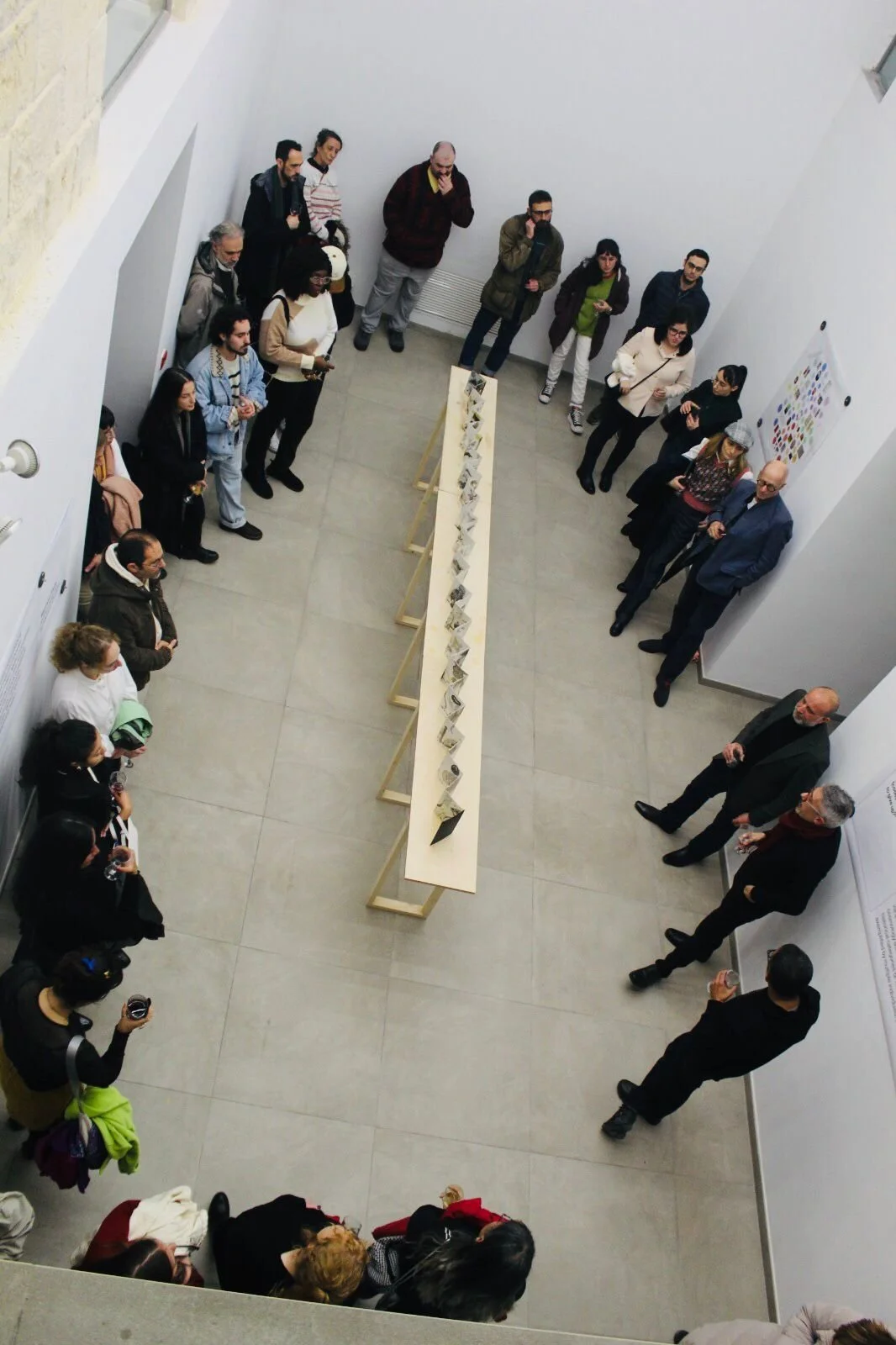
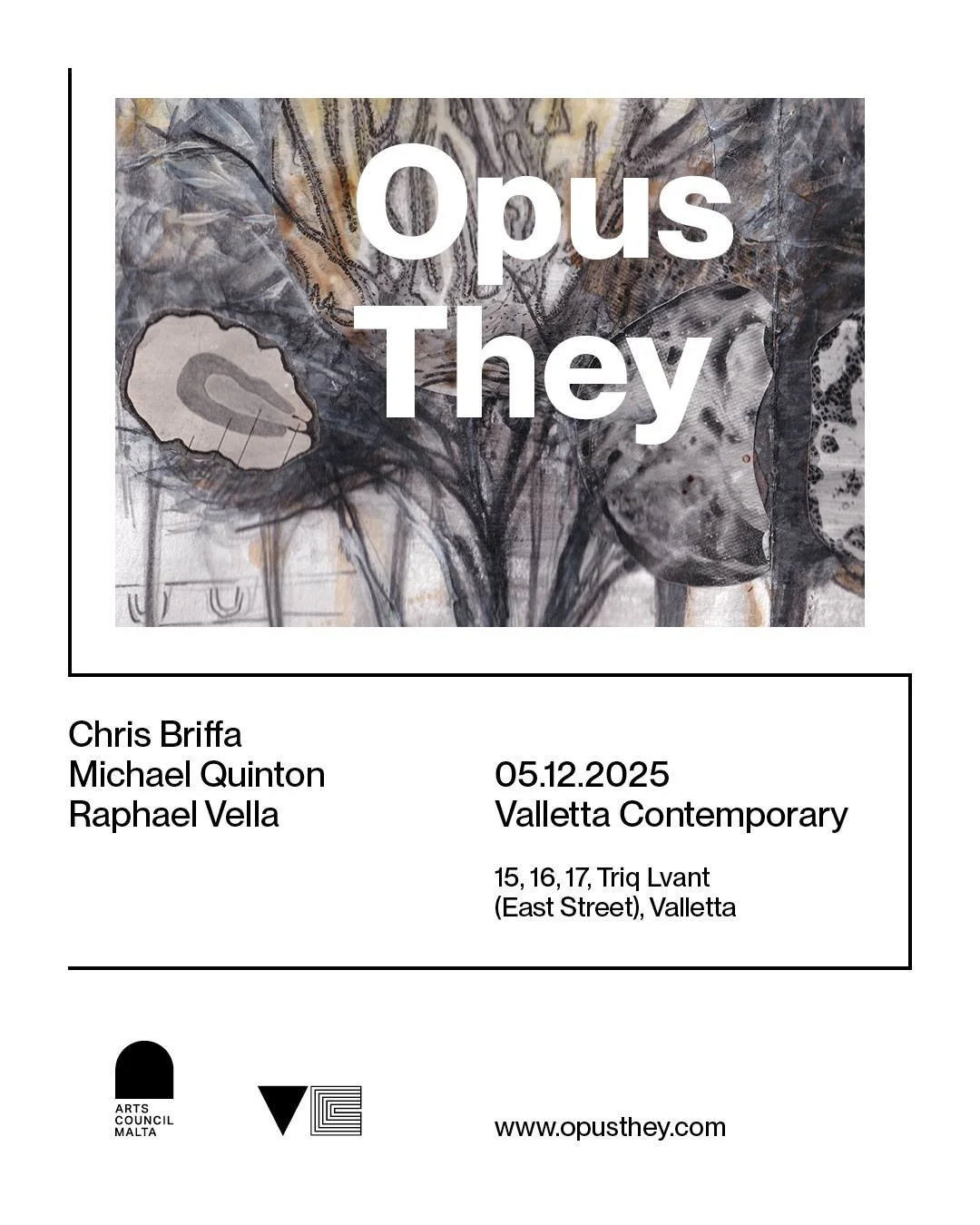
Pop-up Collective Exhibition featuring
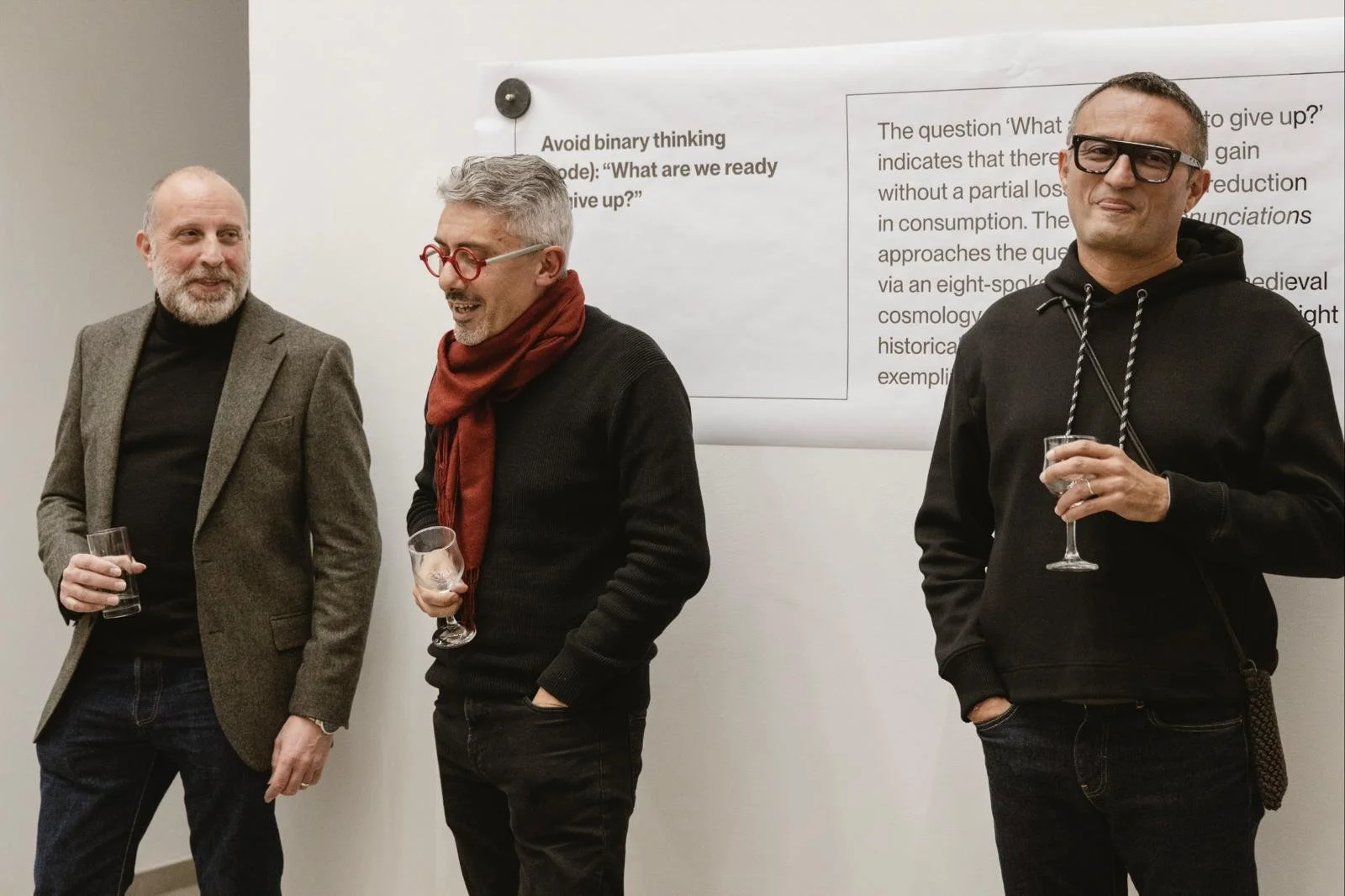
Chris Briffa, Raphael Vella and Michael Quinton
Date: 5th December 2025
Exhibition Open: 5:30 pm till 8:00pm
VALLETTA CONTEMPORARY
15, 16, 17, East Street, Valletta
-
opus they is a critical, transdisciplinary research platform dedicated to confronting the interconnected global crises—ecological, geopolitical, and technological—through the lens of post-anthropocentric creative practice. By merging expertise from art, architecture, and sound design, the project challenges the unsustainable limitations of human-centric thought, aiming to redefine the self in a deeply relational context with the nonhuman world. The initiative’s central mission is to decenter human subjectivity and reconfigure traditional understandings of matter and agency, promoting ethical responsibility and creative potential within a world in flux. Through arts-based research and methodologies that encourage interdisciplinary cooperation, opus they develops prototypes and reflections that seek to dissolve the artificial boundaries between humanity and its ecological and technological environments, ultimately illuminating new, collective modes of thinking and feeling necessary for democratic dialogue and sustainable action.
-
Project Manager: Marcon Borg Caruana
Graphic Design: 2point3
Videos by Chris Briffa
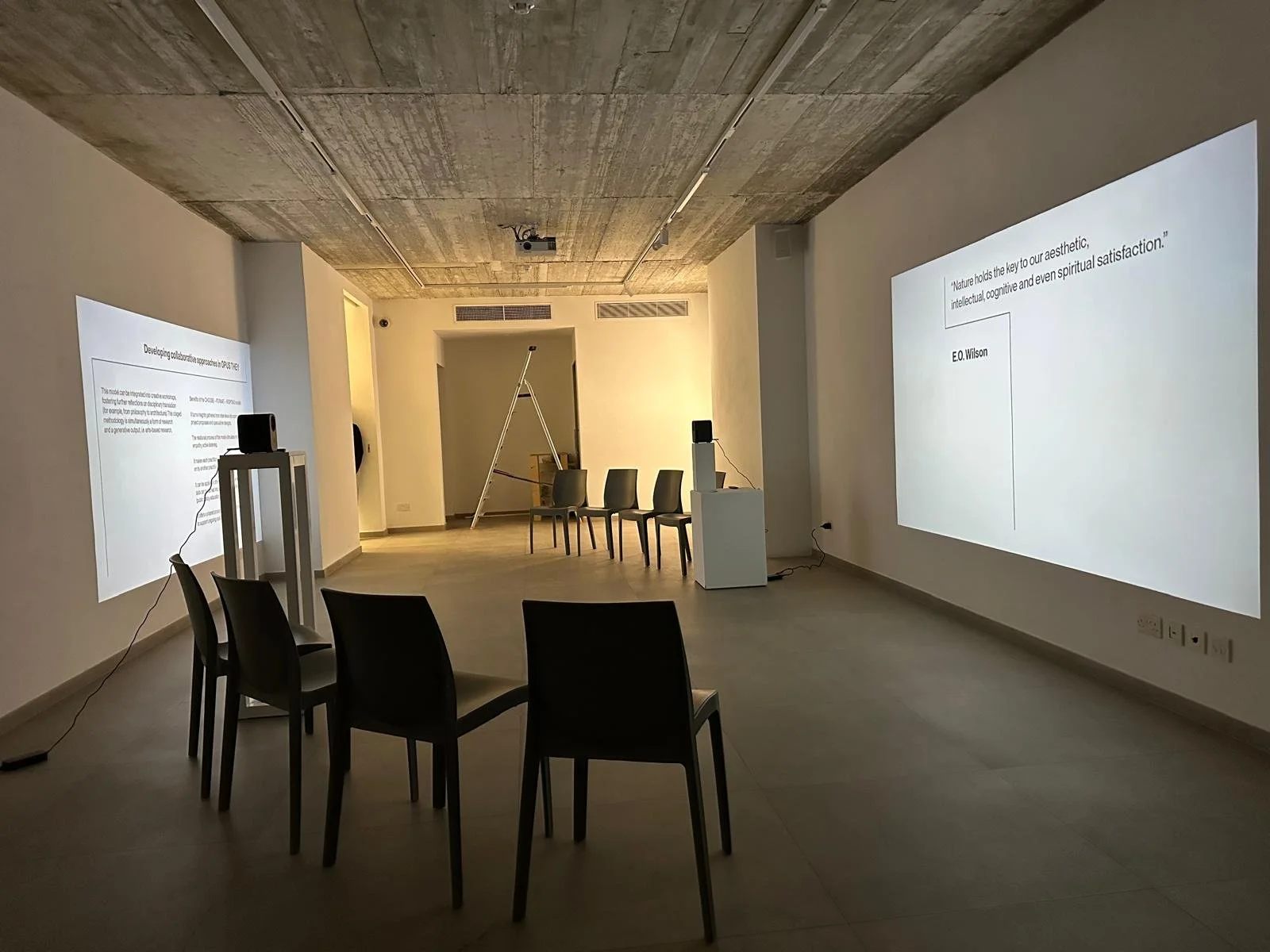
[LEFT] As the metacrisis unfolds in unprecedented and interconnected ways, artists and technologists are resisting the forces of extractivism and exploitation, transforming them into gestures of reciprocity, care, and collaboration with the more-than-human world. Creative practices can challenge the logic of collapse and cultivate new forms of coexistence. Through a series of carefully curated examples, this video reflects on how art can open pathways towards renewal.
[RIGHT] The relentless flow of reels and daily videos that accumulates on our screens mirrors the unceasing acceleration of human progress. Too often, these 'advances' carry within them the seeds of destruction. The screens of our digital devices become a reminder of how innovation often works hand in hand with waste and harm. Yet beyond this digital turbulence, one can sense different restorative and cyclical rhythms. Art invites reflection on the contrast between these two forces. In contemplating this tension, we might question what kind of progress can truly be sustained in the long term, and what must be unlearned for human life to move away from its habitual self-destructive logic.